Brand Essay - July 2026
Taste cannot be copied.
Taste cannot be copied.
Taste cannot be copied.
On originality, judgement and the choices that make something your own.
There are places we remember long after the holiday itself has begun to fade.
Perhaps it was a small hotel somewhere in Italy. An old masseria at the end of a dusty road. Cool stone beneath your feet, linen moving in the open windows, breakfast served on plates that looked as though they had always belonged there.
Nothing was particularly loud. Nothing seemed designed to impress.
And yet, everything felt unmistakably its own.
You may have photographed the chairs, the ceramics, the colour of the walls or the way the light fell across the courtyard. Later, you might find similar objects elsewhere. You could recreate the palette, buy the same linen or save every detail to a folder.
But somehow, the place itself remains impossible to reproduce.
Because what stayed with you was never a collection of beautiful things.
It was the judgement that brought them together.
We often call this taste.
But taste is not simply knowing what to choose.
It is knowing what belongs, what does not — and what should be left untouched.
There are places we remember long after the holiday itself has begun to fade.
Perhaps it was a small hotel somewhere in Italy. An old masseria at the end of a dusty road. Cool stone beneath your feet, linen moving in the open windows, breakfast served on plates that looked as though they had always belonged there.
Nothing was particularly loud. Nothing seemed designed to impress.
And yet, everything felt unmistakably its own.
You may have photographed the chairs, the ceramics, the colour of the walls or the way the light fell across the courtyard. Later, you might find similar objects elsewhere. You could recreate the palette, buy the same linen or save every detail to a folder.
But somehow, the place itself remains impossible to reproduce.
Because what stayed with you was never a collection of beautiful things.
It was the judgement that brought them together.
We often call this taste.
But taste is not simply knowing what to choose.
It is knowing what belongs, what does not — and what should be left untouched.


From reference to point of view
From reference to point of view
Originality is often mistaken for the absence of influence: the idea that something is only truly original if it appeared from nowhere.
But almost everything begins with a reference. A place we have visited. An object we have kept. A material, gesture or atmosphere that has stayed with us. Taste does not require us to forget these things. It asks us to transform them.
Originality is not having no references. It is passing them through a point of view.
Two hotels may use the same chair, the same stone and the same shade of white. One feels entirely its own. The other feels assembled from a moodboard.
The difference is not found in the objects themselves. It is in the relationship between them — and in the thinking that decided why each one should be there.
Today, references travel almost without friction. We can see the same courtyard, restaurant, campaign or home from every possible angle. Visual codes that once belonged to a particular place quickly become a recognisable aesthetic: limewashed walls, weathered wood, handmade ceramics, an olive tree placed just so.
There is nothing wrong with any of these things. But when references become instructions, style begins to travel without meaning. What was once specific becomes a recipe.
A stronger point of view asks different questions. What is already true here? What should be preserved? What would feel unnecessary? It may decide not to smooth the wall, not to add another object or not to correct an imperfection that gives the place its character.
These choices are not decoration. They express a belief about how the place should feel and how people should experience it.
Originality is often mistaken for the absence of influence: the idea that something is only truly original if it appeared from nowhere.
But almost everything begins with a reference. A place we have visited. An object we have kept. A material, gesture or atmosphere that has stayed with us. Taste does not require us to forget these things. It asks us to transform them.
Originality is not having no references. It is passing them through a point of view.
Two hotels may use the same chair, the same stone and the same shade of white. One feels entirely its own. The other feels assembled from a moodboard.
The difference is not found in the objects themselves. It is in the relationship between them — and in the thinking that decided why each one should be there.
Today, references travel almost without friction. We can see the same courtyard, restaurant, campaign or home from every possible angle. Visual codes that once belonged to a particular place quickly become a recognisable aesthetic: limewashed walls, weathered wood, handmade ceramics, an olive tree placed just so.
There is nothing wrong with any of these things. But when references become instructions, style begins to travel without meaning. What was once specific becomes a recipe.
A stronger point of view asks different questions. What is already true here? What should be preserved? What would feel unnecessary? It may decide not to smooth the wall, not to add another object or not to correct an imperfection that gives the place its character.
These choices are not decoration. They express a belief about how the place should feel and how people should experience it.
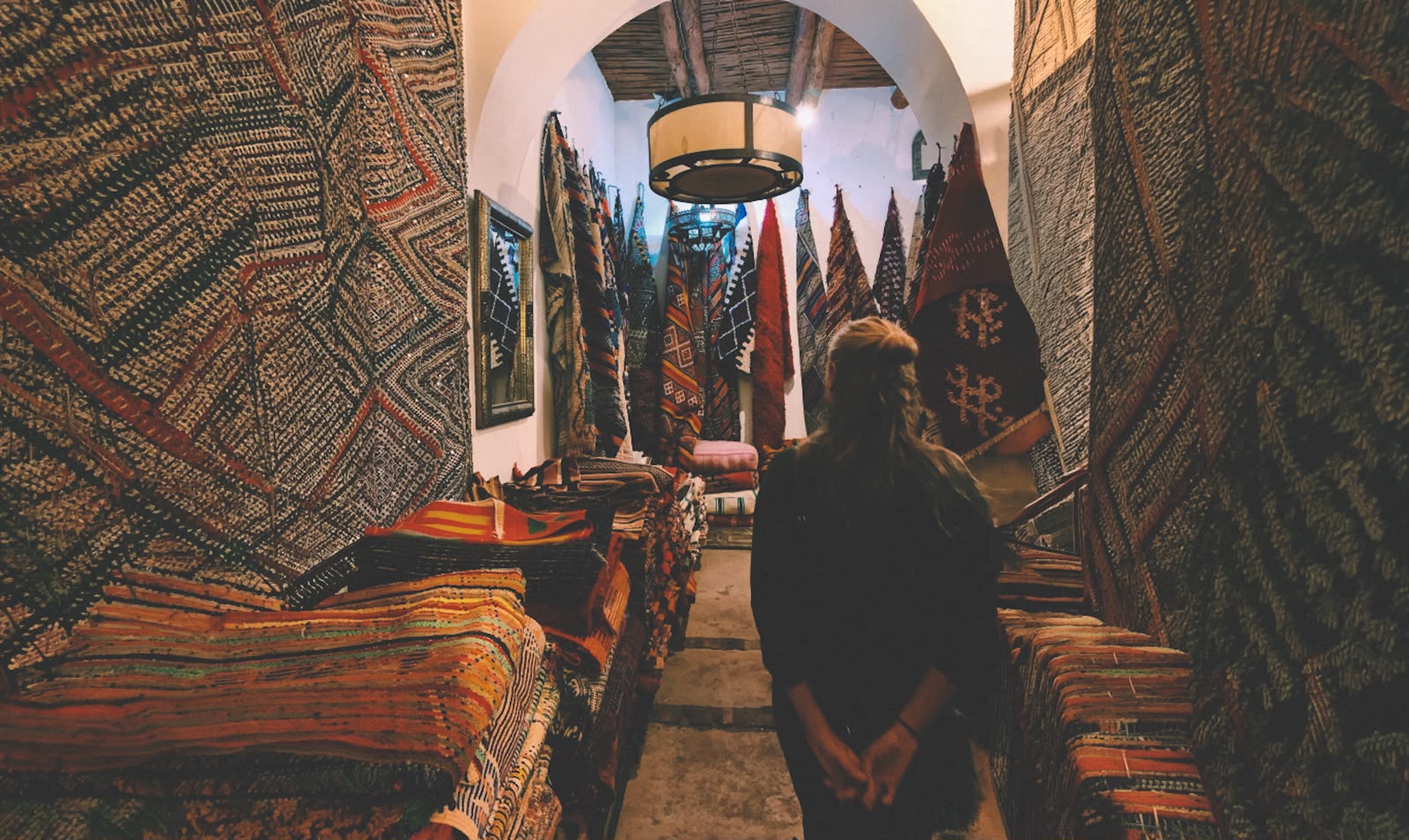
The value of choosing
The value of choosing
This matters far beyond hotels, objects or interiors.
Brands now have access to more references, more tools and more possibilities than ever before. AI can generate a visual world in seconds. It can reproduce an atmosphere, combine influences and offer hundreds of plausible directions before a team has agreed on what it is trying to say.
The temptation is to believe that originality must therefore come from creating something nobody has seen before.
But the uncopyable is not necessarily the novel. It is the specific.
A brand becomes its own not by avoiding influence, but by making choices from a perspective precise enough to alter whatever it touches. The same reference produces a different result because it has been understood, challenged and placed in a new context.
This is where conscious curation becomes more than selection.
To curate consciously is not to collect beautiful things. It is to make choices with enough intention that, together, they become something no one else could have assembled in quite the same way.
That requires judgement, but also restraint. Taste lives as much in refusal as it does in preference. In the reference left on the moodboard. The feature not added. The familiar solution questioned. The good idea removed because it belongs to another story.
This does not always lead to less. It leads to greater precision. Every choice has a relationship to an idea rather than simply to an aesthetic.
Perhaps that is why certain places remain with us. Not because every element was perfect, but because every decision seemed to belong.
This matters far beyond hotels, objects or interiors.
Brands now have access to more references, more tools and more possibilities than ever before. AI can generate a visual world in seconds. It can reproduce an atmosphere, combine influences and offer hundreds of plausible directions before a team has agreed on what it is trying to say.
The temptation is to believe that originality must therefore come from creating something nobody has seen before.
But the uncopyable is not necessarily the novel. It is the specific.
A brand becomes its own not by avoiding influence, but by making choices from a perspective precise enough to alter whatever it touches. The same reference produces a different result because it has been understood, challenged and placed in a new context.
This is where conscious curation becomes more than selection.
To curate consciously is not to collect beautiful things. It is to make choices with enough intention that, together, they become something no one else could have assembled in quite the same way.
That requires judgement, but also restraint. Taste lives as much in refusal as it does in preference. In the reference left on the moodboard. The feature not added. The familiar solution questioned. The good idea removed because it belongs to another story.
This does not always lead to less. It leads to greater precision. Every choice has a relationship to an idea rather than simply to an aesthetic.
Perhaps that is why certain places remain with us. Not because every element was perfect, but because every decision seemed to belong.
The chair can be sourced. The colour can be matched. The photograph can be recreated.
The individual elements may be copied.
The point of view that chose them cannot.
The chair can be sourced. The colour can be matched. The photograph can be recreated.
The individual elements may be copied.
The point of view that chose them cannot.
The chair can be sourced. The colour can be matched. The photograph can be recreated.
The individual elements may be copied.
The point of view that chose them cannot.

Consciously Curated UG (Haftungsbeschränkt)
Consciously Curated UG (Haftungsbeschränkt)
Consciously Curated UG (Haftungsbeschränkt)